

Own the airspace over the crowd. The same counter-drone sensor package, two ways to fly it — a manned Skyship A170 airship or an unmanned tethered aerostat, holding the high ground over a stadium, a base or a border. Detect, track and identify UAS for hours or for weeks: mobile and crewed, or fixed and unmanned. Persistent coverage no ground system or short-endurance drone can match.
Every second a threat is seen earlier is a second your team gets back to decide and act. Altitude buys those seconds — a persistent airborne watch delivers the warning at the start of a threat, not the middle of it. That head start is the whole point.
Cheap drones put stadiums, bases and critical infrastructure at risk from above. Today's counter-UAS is mostly ground-fixed or short-endurance mobile — a few hours of coverage before it has to relocate, refuel or swap batteries. That leaves gaps in exactly the highest-risk windows: as crowds arrive, through the event, and as they disperse. And a box on the ground gives no elevated, human vantage point to read a drone against the wider security picture.
Airborne on the A170 or aloft on a tethered aerostat, the same counter-UAS sensor package delivers an elevated, persistent watch over your airspace — and, where the operator is authorized, supports mitigation of credible threats. Whichever platform flies it, altitude is the advantage.
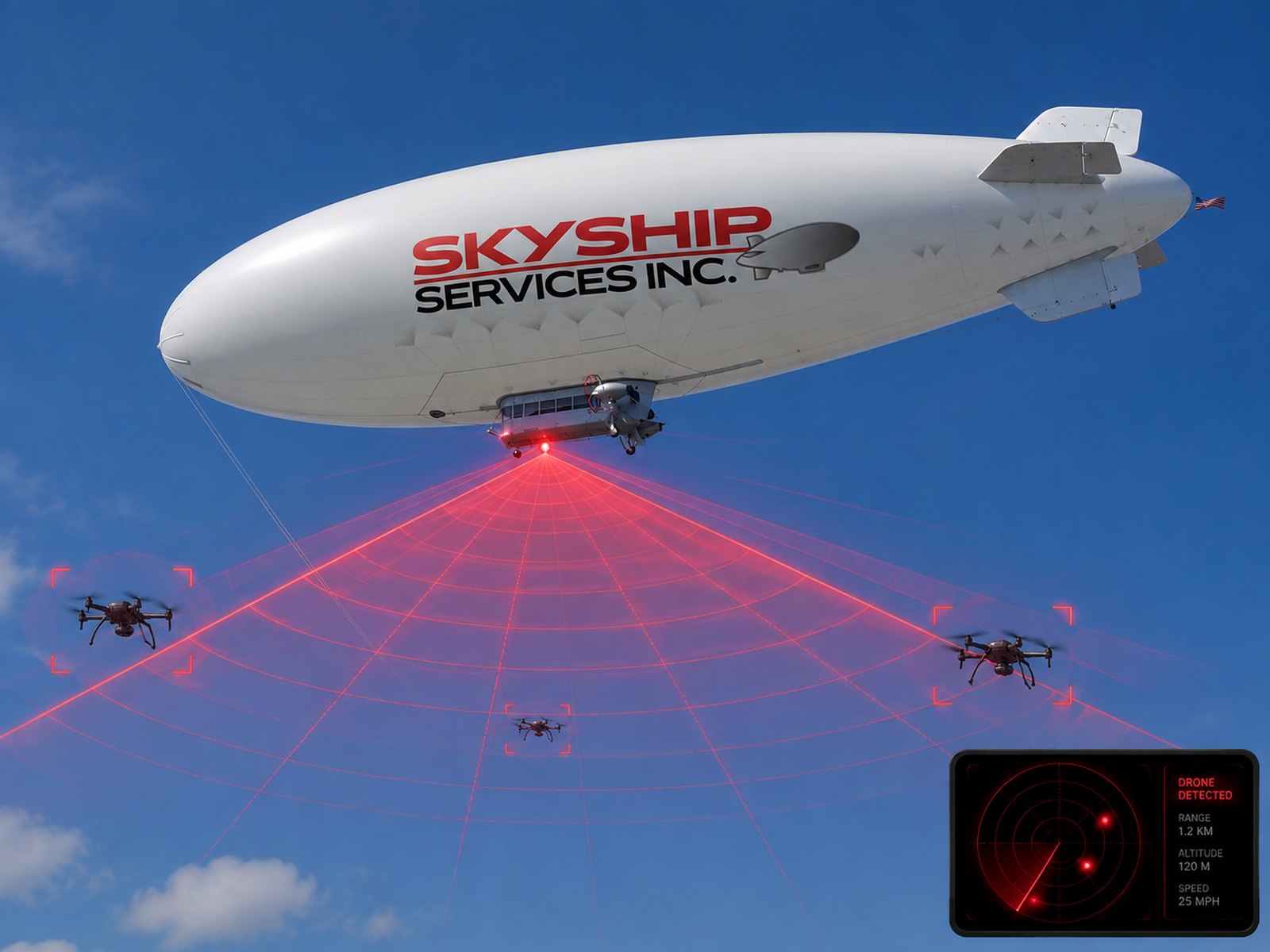
A trained aerial observer correlates a detected drone with what is actually happening on the ground — in real time — because a UAS is often just one element of a more complex threat. Gyro-stabilized EO/IR imagery streams from the airship to the law-enforcement command center and, when useful, to a broadcast feed at the same moment.
Fully autonomous boxes and ground-fixed sensors can flag a track. They cannot look down, judge intent, and tell your commander what they are seeing.
The manned A170 airship isn't the only way to fly it. The same counter-UAS sensor also flies with no crew aloft — a tethered aerostat that holds a fixed high-value site for days or weeks at a time.
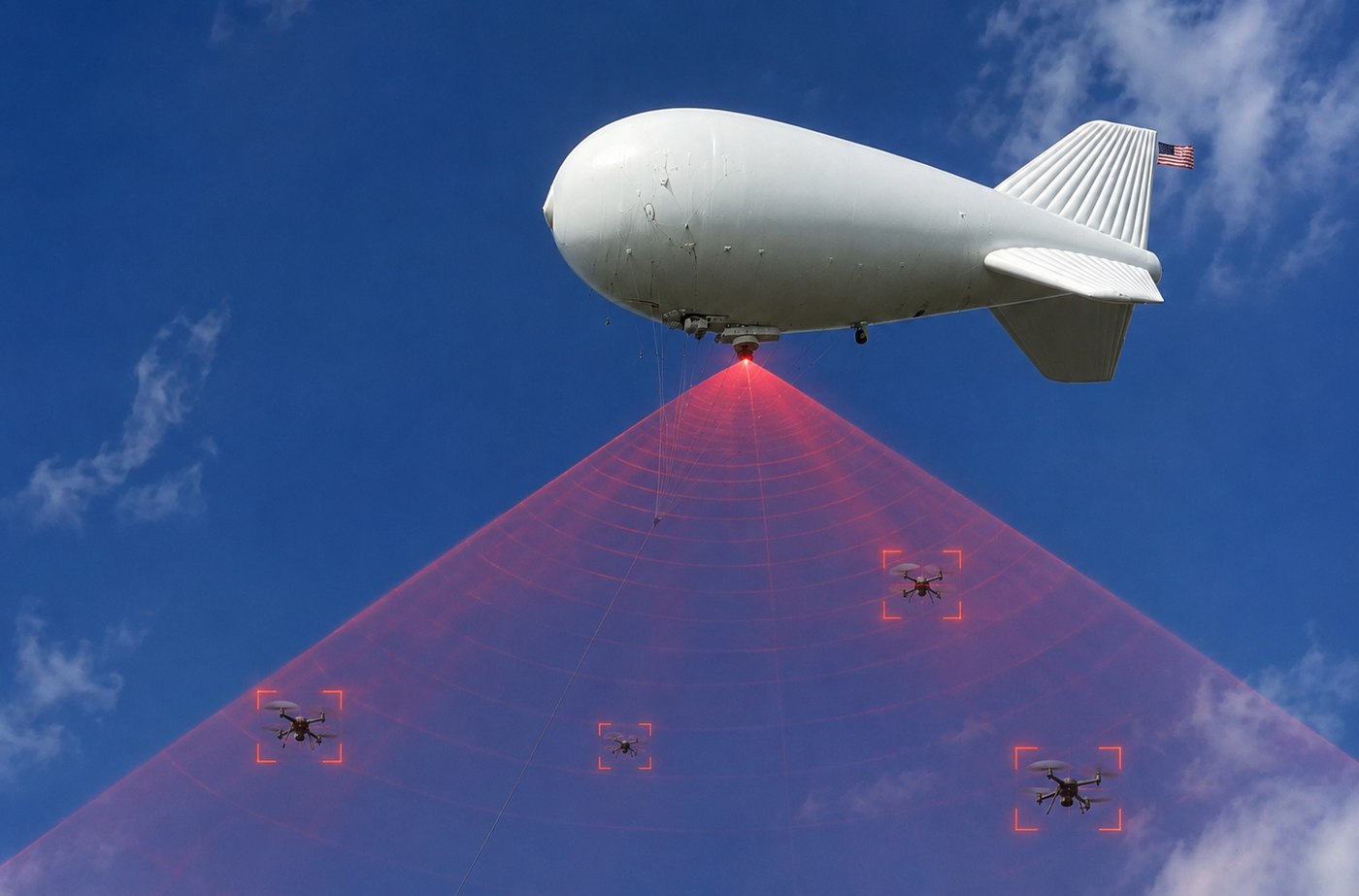
An unmanned tethered aerostat carries the same sensor and holds a high-value site for days or weeks at a time — no crew aloft, the lowest cost per hour on station, and a permanent elevated watch over a base, border, port or piece of critical infrastructure.
Counter-UAS delivered on both an unmanned tethered aerostat and a manned airship is a combination no competitor can offer. Skyship Services owns the platforms, the payload integration and the flight and operating experience across both — and stands alone as the sole leader in lighter-than-air counter-drone defense.
Five things a manned A170 does that a ground box, a helicopter or a short-endurance drone cannot.
Hours on station, not minutes. One airship covers arrival, event and dispersal without a break in watch.
A crew that correlates the drone with the ground picture in real time — and streams what it sees to command.
The crowd expects the airship — it reassures rather than alarms, unlike a drone swarm or a helicopter low overhead.
Not a fixed installation. It repositions between venues and deploys where the event is, on the timeline it needs.
The same airship can carry sponsor branding and feed the aerial broadcast — offsetting the security cost like no other C-UAS platform.
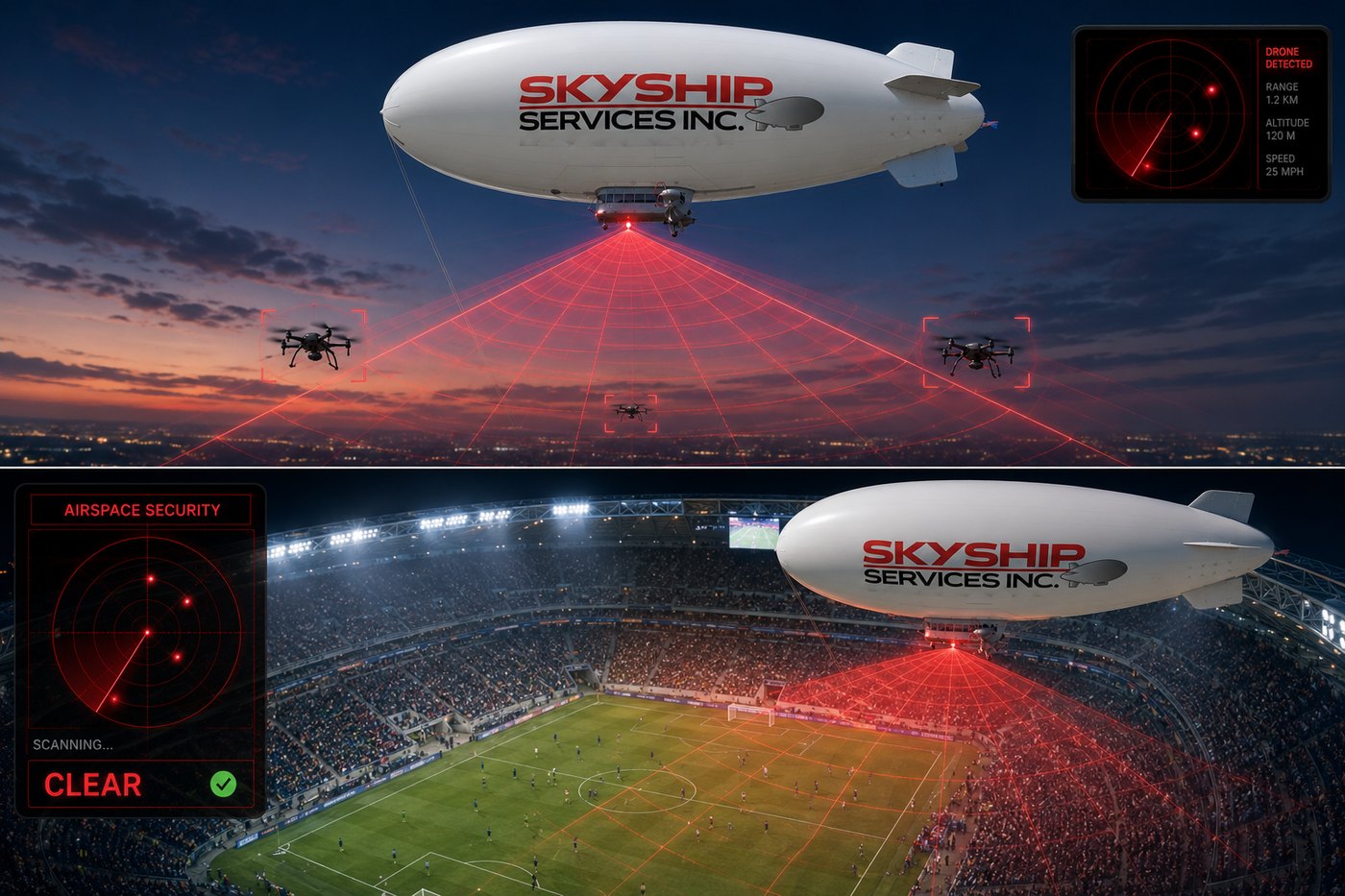
Persistent overwatch for the full duration of a major event — arrival to dispersal. With the SAFER SKIES Act extending counter-drone authority to state and local law enforcement, venue operators finally have a deployable, venue-scale option ahead of events like the 2028 Los Angeles Olympic and Paralympic Games.
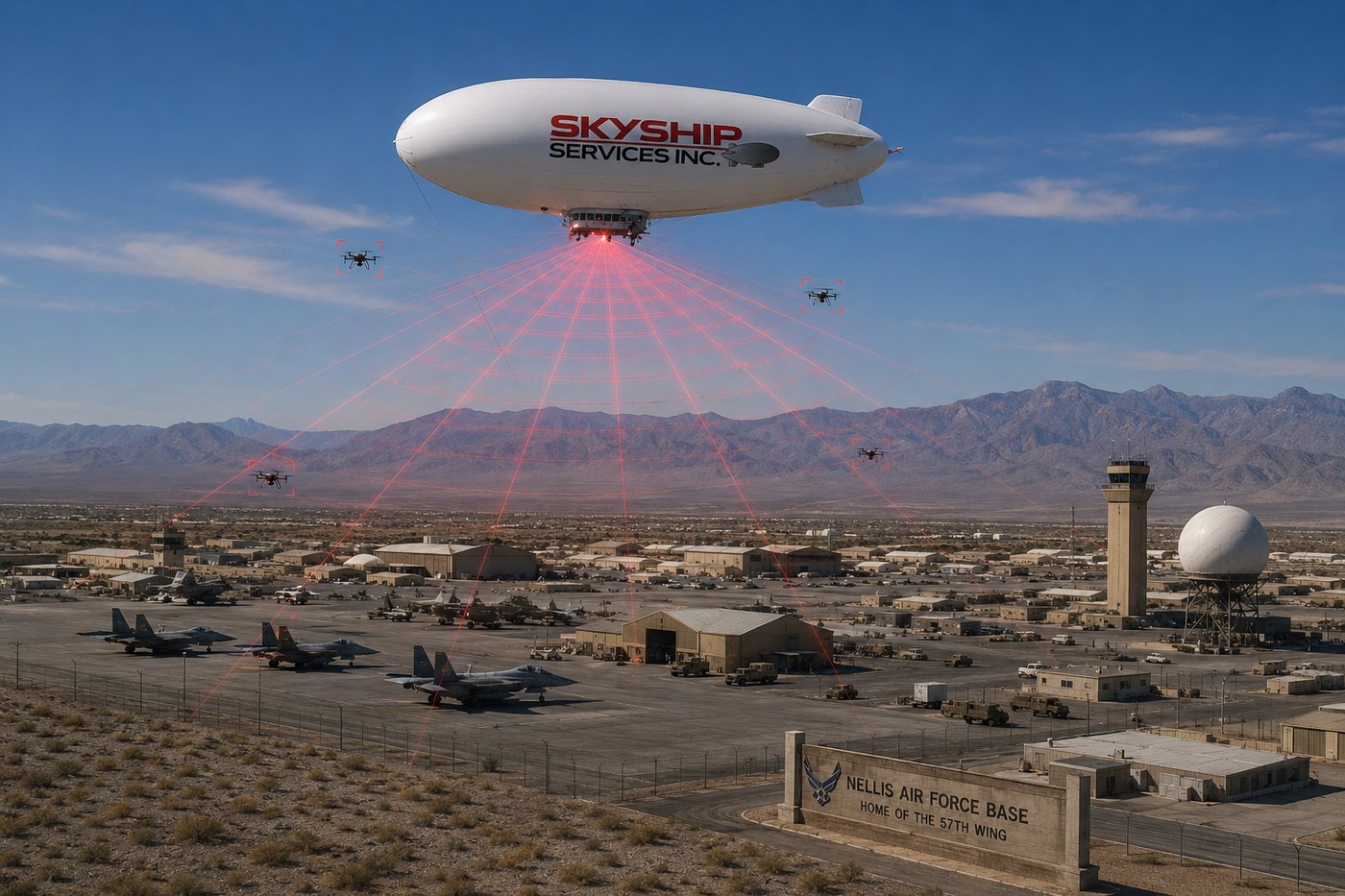
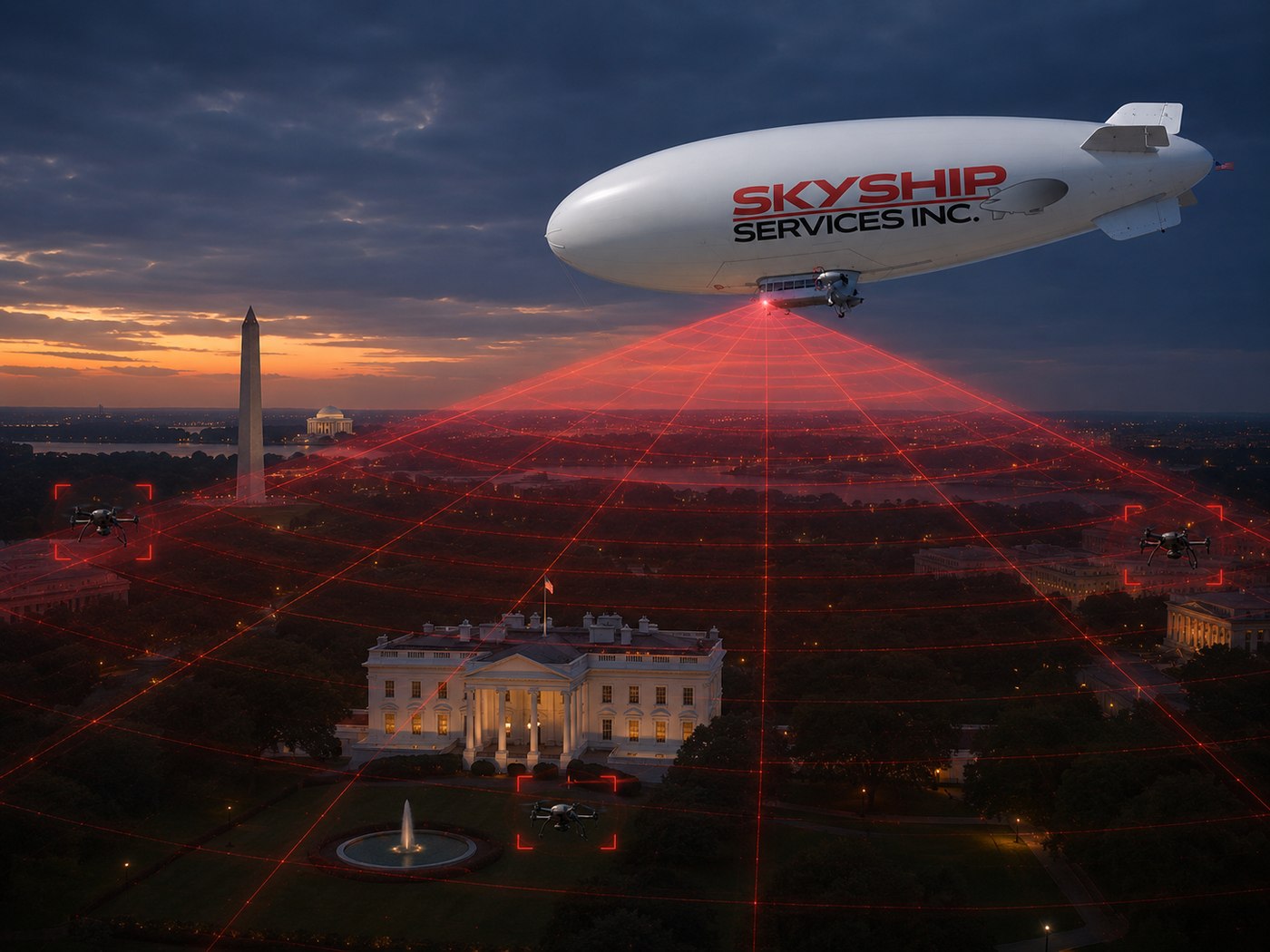
An elevated, always-there sensor over the assets that matter — bases, ports, refineries, power sites and their approaches. A tethered aerostat is ideal here: unmanned and aloft for days or weeks at a time. From altitude the platform holds the low-and-slow tracks that ground radar struggles with.
The C-UAS payload is new to the airship. The airship is not new to the mission — it is an FAA type-certificated platform with decades of government and law-enforcement flight behind it.
FAA type-certificated · payload-agnostic architecture · law-enforcement assistance heritage. Specific sensor performance and configurations are discussed under a capability brief.
Tell us the venue, the dates and the threat picture. We will come back with the deployment, the sensor options and the operating plan.
Request a Capability Brief →